Most UK practices are not short of demand. They are short of capacity on the NHS side and short of enquiries on the private side, and the marketing that fixes one is not the marketing that fixes the other.
This page is about dental marketing in the UK specifically: the NHS and private mix that shapes what you actually want more of, the advertising standards a dental practice works under, and the gap between an enquiry arriving and somebody answering it.
The problem is usually the private mix, not the volume
A practice with a full NHS list and a quiet implant or Invisalign diary does not need more traffic. It needs the right traffic. Generic dental marketing sends you people looking for an NHS dentist accepting new patients, which is demand you either cannot serve or do not want more of. Meanwhile the treatments carrying real margin get one paragraph on a Services page.
The practices that grow private revenue do something unglamorous: they build a proper page for each treatment they want more of, written for a nervous adult who has been thinking about it for two years, and they answer the cost question honestly. That is the whole trick, and it is why so few practices manage it.
What UK patients search, and what stops them
British patients search cautiously. Enquiries cluster around cost, pain, and whether it is available privately: how much are dental implants UK, Invisalign cost, emergency dentist near me, private dentist taking new patients. Emergency searches behave differently from every other kind. Somebody in pain rings the first three practices in the results and books whoever answers. There is no considered comparison, and there is no second call.
Advertising is also more constrained here than practices often realise. Dental advertising in the UK sits under General Dental Council guidance as well as the ASA and CAP advertising codes, which govern how treatments and claims are presented and how patient testimonials and before-and-after images may be used. We write to that standard rather than borrowing American dental copy, which routinely would not pass here. Where something you want to say sits close to the line, we tell you and you decide with your own compliance advice.
What we build for a UK practice
Treatment pages that answer the cost question
Our functional website work centres on the treatments you want to grow rather than a single services list. Implants, Invisalign, cosmetic work and emergency appointments each get a page that explains the treatment, what the appointment involves, and a genuine price range. Practices hesitate over publishing prices. Not publishing them simply moves the question to a phone call your receptionist may not have time for.
Local SEO for the catchment you actually serve
Local SEO for a practice means a properly categorised Google Business Profile, accurate opening hours including emergency cover, and treatment pages specific enough for Google to match against a search like Invisalign in your town. Consistency of your name, address and phone number across UK directories matters more here than most practices expect.
The out-of-hours enquiry that used to reach voicemail
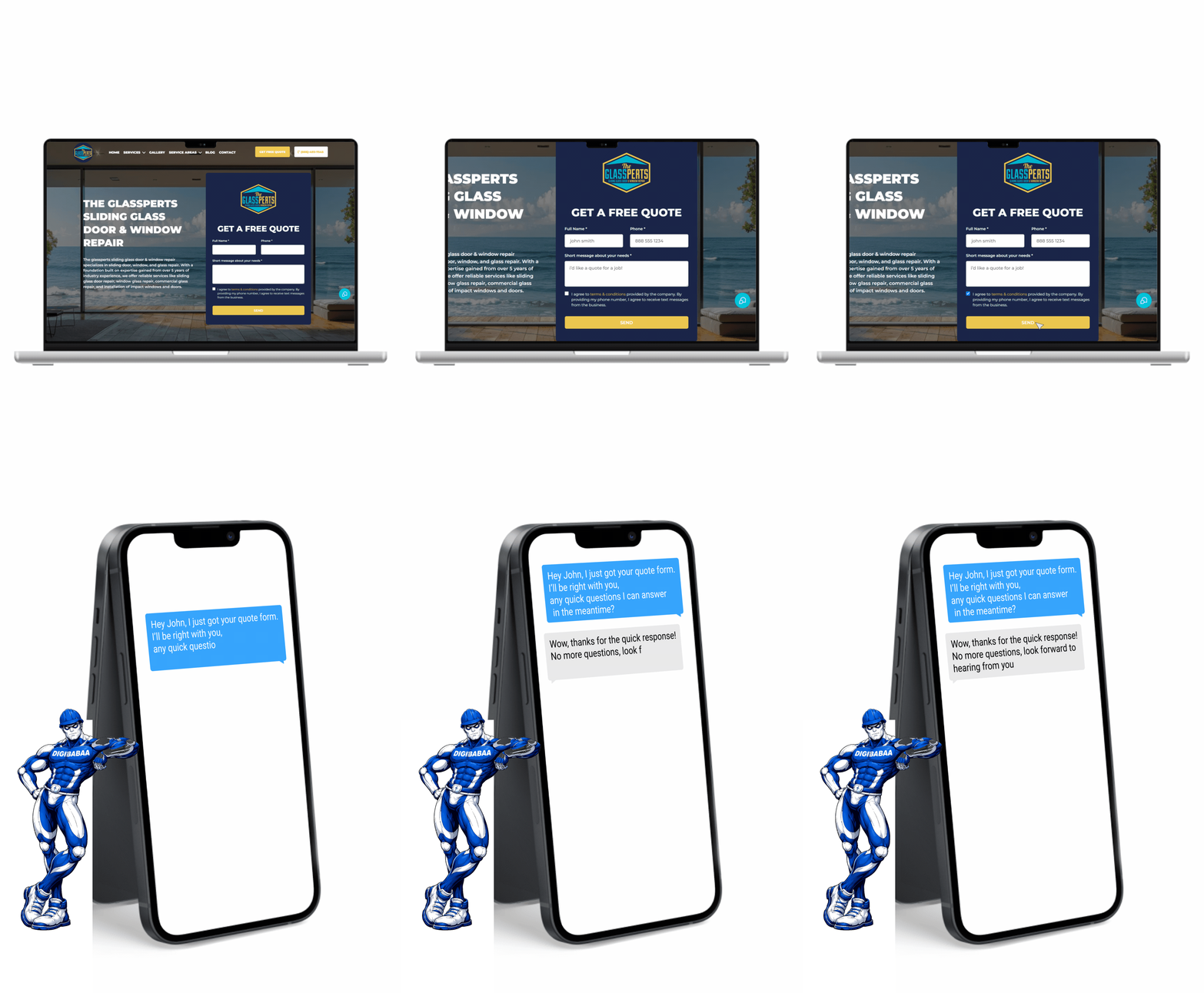
Missed call text back texts anyone whose call you miss within seconds. For a practice this matters most at lunchtime and after five, and most of all for emergency callers, who simply dial the next practice rather than leave a message.
Follow-up for treatments people think about for years
Nobody decides on implants in an afternoon. Automated lead follow-up keeps in touch with an enquiry through a decision that may take months, and reminds patients when a check-up or hygiene appointment is due, without your front desk running the list by hand.
Enquiries from every channel in one place
Facebook messages, website chat, email and text arriving in one inbox means nothing is answered twice or missed entirely because it landed somewhere nobody was watching.
Reviews, collected properly
Our review system asks patients for a Google review at the right moment. We do not filter by how happy someone is first. Review gating breaches Google’s policies and risks the listing, and for a regulated practice the reputational downside is worse than the lost star.
What we will not claim
There is no invented case study on this page. We do not publish a verified UK dental case study, and inventing one would be both dishonest and easy to catch.
What we agree instead is what gets measured: private treatment enquiries, how many missed calls turn into conversations, the share of enquiries that become booked appointments, and new patient numbers by treatment type. If you want to speak to a current client before committing, ask and we will arrange it.
Pricing
Systems start at $197 per month. Our pricing is set in US dollars, so the sterling amount moves slightly with the exchange rate, and we would rather say that plainly than advertise a pound figure we cannot hold. There are no long-term contracts and no hidden fees. Details on our pricing page.
Questions we get asked
Can you help us grow private work without losing our NHS list?
Yes, and they are largely separate problems. NHS demand generally arrives on its own. Private growth comes from treatment-specific pages and follow-up aimed at people weighing up a decision. The work we do targets the second without interfering with the first.
Are we allowed to advertise dental treatments in the UK?
Yes, within limits. Dental advertising falls under General Dental Council guidance alongside the ASA and CAP codes, which shape how treatments, claims, testimonials and before-and-after images may be presented. We write within that standard and flag anything borderline so you can check it with your own compliance advice. We do not copy American dental marketing, much of which would not be acceptable here.
How long before we see new patients from this?
Missed-call text back and follow-up work on enquiries you are already getting, so they start recovering appointments almost straight away. Search visibility is slower: expect impressions to move within one to two months and steady search-driven enquiries to take several months. Anyone promising rankings by a date is guessing.
Do we really need to publish prices?
You do not have to, but a price range on implant and Invisalign pages reliably improves enquiry quality. Patients who see nothing assume the worst and often do not ring. A range also means your receptionist spends less time on calls that were never going to convert.
What happens to enquiries that come in when the practice is closed?
A missed call gets an automatic text within seconds, and web enquiries get an immediate acknowledgement with what happens next. The patient knows they have been heard instead of deciding you are not interested and ringing the practice down the road.
See what your practice’s website would look like
We will build you a free preview of your new site before you commit to anything, so you are judging real work and not a pitch deck.